The component passed every simulation. It held up through mechanical validation. The seal geometry looked correct on paper, and the materials were well within specification. Then, during final pre-production leak testing, it failed. Not catastrophically, but enough to miss the acceptance benchmark the customer had written into the contract six months earlier.
The engineering team had three options: modify the tooling, renegotiate the leak rate, or go back to the design. None of them was cheap. All of them came with a schedule cost. And none of them needed to happen if the component had been leak-tested eight months earlier, when the geometry was still on a drawing and the tooling had not yet been cut.
This situation is common enough to have a pattern. A development process moves through simulation, structural validation and materials selection, all of which can be done without a physical part. Leak behaviour is far less predictable. Experienced engineers can often anticipate where a design is likely to be vulnerable, but how a component actually seals only becomes clear once a physical part is built and tested. Early testing gives the engineering team time to use the results. Late testing often reveals the same issue only after tooling and delivery commitments are already in place.
The hidden cost of treating leak testing as a final gate
Production engineers understand tooling costs, since they know what a production delay costs per day. What is harder to quantify, and therefore easier to underestimate, is the cumulative cost of introducing leak testing only at the end of the development process.
By the time a component reaches final pre-production testing, several things are already fixed. The geometry is tooled, the seal design is locked in, the bill of materials has been through procurement, and delivery commitments may already be in place. If a leak test at this stage reveals a structural weakness, a weld that fails at operating pressure or a joint that leaks under thermal cycling, the options available to the engineering team are limited and expensive.
The principle is well established in product engineering: the cost of correcting a design defect increases sharply at each stage of the development process. A change at the concept stage costs little, whereas one after tooling costs considerably more. A change after a customer audit has been passed, and a production line validated, still costs more. Late-stage leak testing does not make components better; it identifies problems when fixing them is most expensive.
What early leak testing tells you that late testing cannot
A pass-or-fail result at the end of a production run indicates whether the component meets the specification. A test result during development tells you something more useful: where the design is vulnerable.
Helium leak testing on a prototype or pre-series part can locate the precise point at which a seal fails, identify which joint geometry holds under pressure cycling and which does not, and reveal how leak behaviour changes across the temperature and pressure conditions the component will face in service. That information is design intelligence. It tells the engineer not only that the component failed, but also why and where the fix needs to go.
Consider what this means for a manufacturer developing a new EV battery enclosure, a heat pump compressor or a sealed hydraulic module. The geometry of the enclosure, the choice of gasket material, and the torque specification for every flanged joint all affect leak performance, which becomes clear only when the physical assembly is tested under realistic conditions. Simulation can predict expected behaviour. Physical helium leak testing reveals how the assembled component actually performs, including the effects of manufacturing variation, assembly tolerances and real sealing conditions.
This kind of feedback only has value when the design is still open. Once tooling is cut and geometry is fixed, a leak map of the component becomes a post-mortem rather than a development tool. The earlier a test is run, the larger the window to act on its results.
How prototype leak testing works in practice
For many development teams, the barrier to early leak testing is not a lack of willingness: it is the equipment. Buying dedicated helium leak testing infrastructure for a component that may change significantly before production is difficult to justify at the prototype stage. The capital outlay is real, lead times on custom systems run to months, and the test specification should ideally be built around the final production geometry, which may not yet exist. This is precisely where external prototype leak testing can add value: Manufacturers can obtain reliable test data before investing in dedicated production equipment.
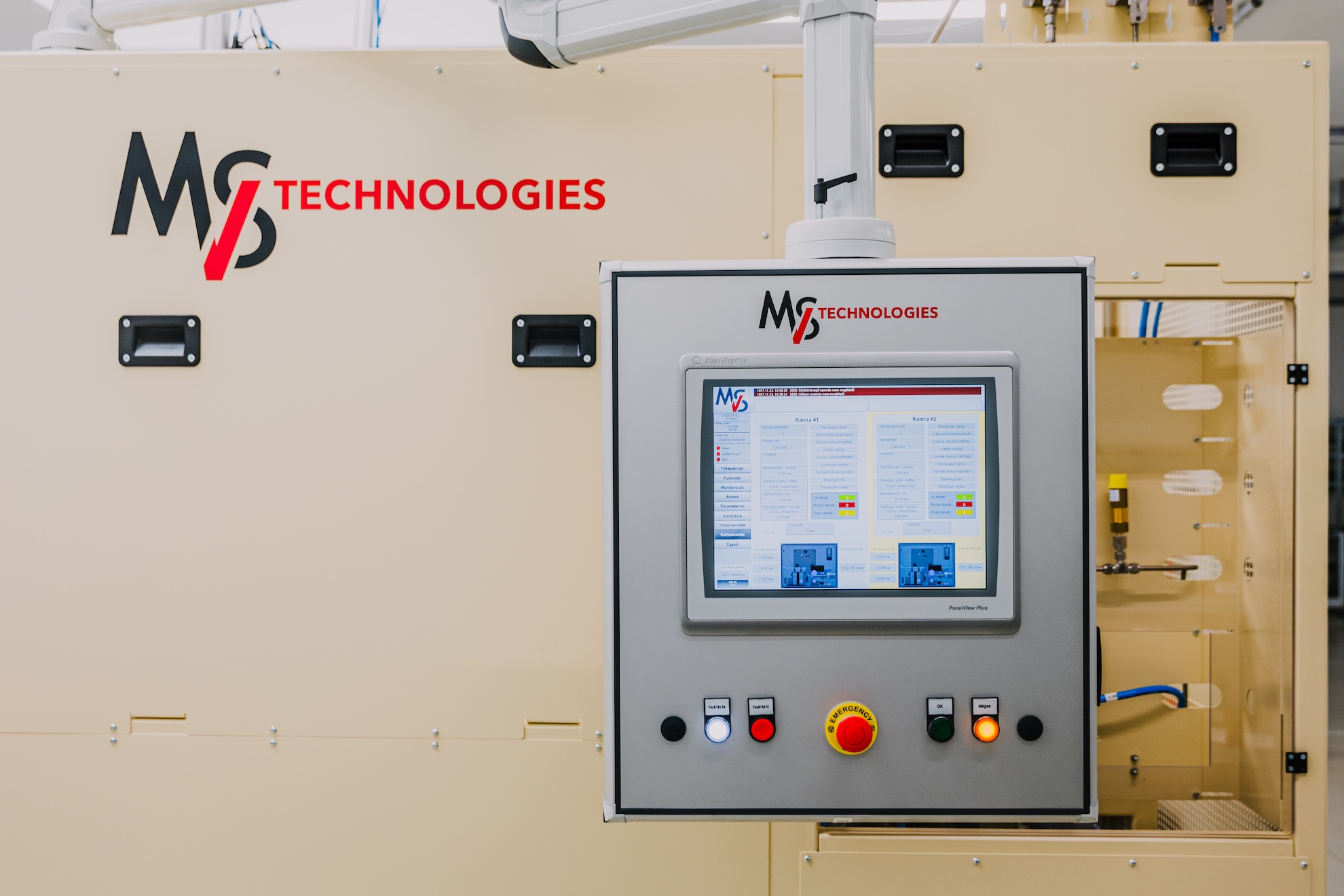
MVS Technologies offers a dedicated prototype and pre-series testing service that addresses this situation precisely. Using in-house testing equipment with a Helium Recovery Unit, the team tests prototypes, pre-series parts and selected low-volume components on behalf of development partners. The scope extends beyond pass or fail: during the prototype phase, MVS Technologies works alongside the customer's development team to identify design weaknesses, propose improvements, and help define the test specification that will eventually govern production.
This matters because the test specification itself is a design decision. The acceptance leak rate, test pressure, conditioning sequence, and measurement method all influence how the component needs to be designed and manufactured. Getting these parameters right at the prototype stage, with measured data from the actual part, produces a specification that the final production system can reliably meet. Leaving them undefined until production is underway is one of the most consistent sources of late-stage qualification failures.
The service covers a broad range of industries and component types. Automotive sealing systems, HVAC refrigerant circuits, energy sector enclosures, and medical device housings: any application where helium leak testing will eventually govern production quality is a natural candidate for prototype testing during development. The component does not need to be finalised, and the test specification does not need to be agreed in advance. Helping to establish both is part of what the service provides.
When to move to a dedicated production test system
Prototype testing is not a permanent substitute for production infrastructure. It is a development tool for answering design questions, validating a specification baseline and generating the measured data that a production system will eventually need to replicate at volume.
The point at which a dedicated system becomes the right investment is when the design is sufficiently stable that its geometry, acceptance criteria, and production volume can be defined with reasonable confidence. At that point, the data gathered during prototype testing becomes the input to the system specification. The pressure levels that discriminated good parts from bad during development, the measurement conditions that proved reliable across the component range, and the documentation requirements identified through customer dialogue all feed directly into the production tester design.
MVS Technologies maintains this continuity throughout the project. The engineering relationship that begins with prototype testing continues through the design, build and commissioning of the production system. The result is a test specification grounded in how the component actually behaves, and a production system built around that specification, rather than one specified in advance of the data and revised later under schedule pressure.
The same logic applies to manufacturers who have already reached production with a specification that was never properly validated at the prototype stage. Testing early-production parts against a proposed criterion and identifying where it is too tight, too loose, or poorly defined can prevent the same late-stage failures from recurring across future product variants or next-generation designs.
If your development process is approaching prototype or pre-series testing, or if you have a component that has reached production with a specification still needing validation under real-world test conditions, get in touch with MVS Technologies. The conversation can start wherever the project stands.