Until very recently, helium supply security was something most manufacturers were aware of in principle but rarely treated as an urgent operational concern. That has changed. Within a few months in 2026, a single geopolitical disruption threatened access to roughly a third of global helium supply and interrupted the logistical routes used to deliver the gas to customers worldwide. For any company that relies on helium leak testing as part of its quality assurance process, the message could not be clearer: helium cannot be regarded as a resource that will simply turn up when ordered.
This article explains why the current situation matters, why helium is uniquely vulnerable to supply shocks, and why Helium Recovery Units have moved from being a desirable cost-saving option to a strategic necessity.
A finite resource with no manufacturing route
Helium cannot be manufactured. Unlike most industrial gases, it cannot be produced on demand by combining feedstocks in a chemical reactor. The vast majority of commercial helium is extracted as a by-product of natural gas processing, where it is separated from the main gas stream during liquefaction. This means helium production is structurally tied to natural gas operations: when the LNG facilities stop, helium output stops with them.
Once helium escapes into the atmosphere, it is effectively lost. Its low atomic mass allows it to rise through the atmosphere and eventually drift into space, beyond any practical economic recovery. Every cubic metre vented during a leak test represents a permanent depletion of a resource that took millions of years to accumulate beneath the ground.
Global production is also geographically concentrated. A small number of facilities in a small number of countries supply most of the world's commercial helium. The United States produces a significant share, but Qatar alone accounts for around one-third of global supply, exported almost exclusively through a single maritime corridor: the Strait of Hormuz.
The 2026 supply shock
In early March 2026, missile and drone strikes targeted Qatar's Ras Laffan industrial complex, the world's largest helium production site. QatarEnergy declared force majeure shortly afterwards, halting helium output. At the same time, the Strait of Hormuz was effectively closed to most commercial shipping, blocking the export route for any remaining helium in regional storage.
The consequences arrived quickly. Within two weeks, the world's largest industrial gas distributor declared force majeure on helium deliveries, allocating customers as little as half their normal monthly quantities. Prices rose sharply, and buyers faced allocation, surcharges and longer delivery uncertainty. Specialised cryogenic containers, of which only a few thousand exist worldwide, became stranded in Qatar or stuck in transit, removing physical capacity from the supply chain, even if production might be restarted.
Even after production or shipping resumes, industry sources expect recovery to take time, as containers must be repositioned, refilled and returned through long delivery cycles.
Where the squeeze is being felt first
Semiconductor manufacturers are among the most exposed customers in the global helium market. Helium is essential for several stages of chip production, including ultra-low-temperature cooling and precision wafer processing, and the industry has overtaken medical imaging as the world's largest consumer of helium. Major memory chip producers have already reported significant price increases for their 2026 production allocations, and hard drive manufacturers, which use helium in their high-capacity drives, are passing along comparable cost increases through their pricing.
Healthcare is similarly affected. MRI scanners depend on liquid helium to maintain superconducting magnets at operating temperature, and any sustained shortage can compromise scheduled imaging services across entire health systems.
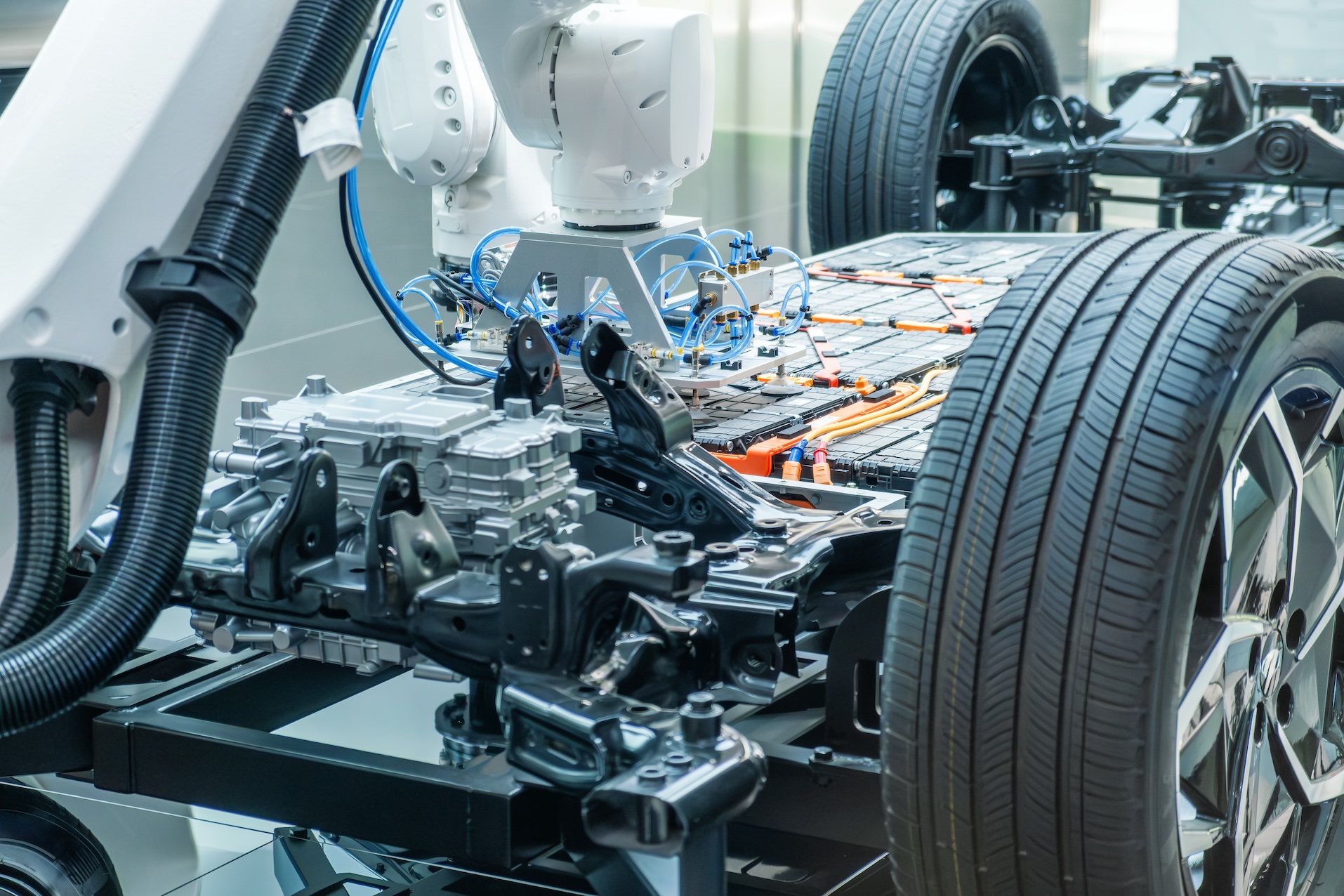
For manufacturers that use helium for leak testing, the picture is equally serious, even if it has received less media attention. Automotive, aerospace, HVAC and energy producers all rely on helium-based leak detection to verify product integrity. When helium is rationed or unavailable, testing throughput drops, qualification timelines slip, and production lines may be forced to pause altogether. Every leak tester sitting idle for lack of gas is, in effect, an entire production stage at a standstill.
Why helium recovery has become essential
The lesson from this crisis is straightforward. Manufacturers that vent helium after each test have no protection against external supply shocks. Manufacturers that recover and reuse helium internally have a buffer that absorbs much of the disruption. A Helium Recovery Unit captures the helium-containing exhaust gas from leak testing, conditions it, and returns it to the process for reuse. The result is a substantial reduction in dependence on fresh deliveries.
MVS Technologies' Helium Recovery Units reclaim up to 95% of the helium used during testing. They operate across a remarkably wide pressure range of 1 to 1,200 bar, accommodate helium concentrations from 10% to 95%, and can be configured with flexible balloon storage, scaled to the gas volumes generated by a particular application. That versatility means the same core technology can serve a low-pressure fuel tank test, a high-pressure aerospace qualification campaign, or a centralised recovery station serving several test benches across a large facility.
Recovery on this scale changes the economics of helium use. In high-throughput environments, an HRU can pay for itself within months, sometimes within weeks. More importantly, in the current climate, it converts an unpredictable external cost into a controllable internal loop, insulating production schedules from precisely the kind of disruption now affecting customers without recovery infrastructure.
Two configurations, one outcome
MVS Technologies designs HRU systems in two configurations to suit different operational realities. Integrated units are built directly into the leak tester, sharing a footprint and operating as part of the machine's control logic. This approach minimises floor space, simplifies operation, and works particularly well for new production lines or fully automated environments.
Standalone HRUs are independent machines that connect to existing leak testers or other helium-using equipment. They are ideal for facilities that want to upgrade their helium economy without replacing existing systems. A single standalone unit can serve several test benches simultaneously, drawing recovered gas from each as cycles complete. Both configurations deliver the same recovery performance; the choice depends on production layout, equipment age, and how a facility wants to manage its helium loop.
Fast response when capacity is needed immediately
The current supply situation has caught many manufacturers without recovery capability in a difficult position. For those who need to secure their helium supply quickly, MVS Technologies also offers standalone HRU machines on a rental basis. This service-based option allows a recovery unit to be deployed on site within a much shorter timeframe than a full custom design would permit, providing immediate relief while a longer-term solution is evaluated.
Rental HRUs are based on the same recovery principle and can provide substantial consumption reduction, depending on the application, gas volume and integration conditions. They prove particularly useful when production volumes rise unexpectedly, when existing equipment is undergoing maintenance, or when sustainability requirements imposed by customers or auditors must be met at short notice. The flexibility allows manufacturers to maintain production continuity without committing to capital expenditure before they are ready.
A predictable response to an unpredictable market
The 2026 helium crisis is unlikely to be the last disruption of its kind. Helium remains a finite, geographically concentrated resource transported through a small number of vulnerable corridors, and demand from the semiconductor and healthcare sectors continues to grow. Companies that emerge from this period in the strongest position will be those that have reduced their exposure to external supply by recovering and reusing as much of their own helium as possible.
For manufacturers using helium leak testing, an HRU is no longer an optional sustainability upgrade. It is an operational safeguard, a cost-control measure, and a risk-management tool, all combined in a single piece of equipment that pays for itself in normal market conditions and proves invaluable in difficult ones.
If you would like to discuss how a Helium Recovery Unit could fit into your operation, whether as an integrated part of a new system, a standalone upgrade to existing equipment, or a rental solution to address an immediate need, the MVS Technologies team would be glad to talk. Get in touch to find out how we can help you protect your production from the next supply shock.